
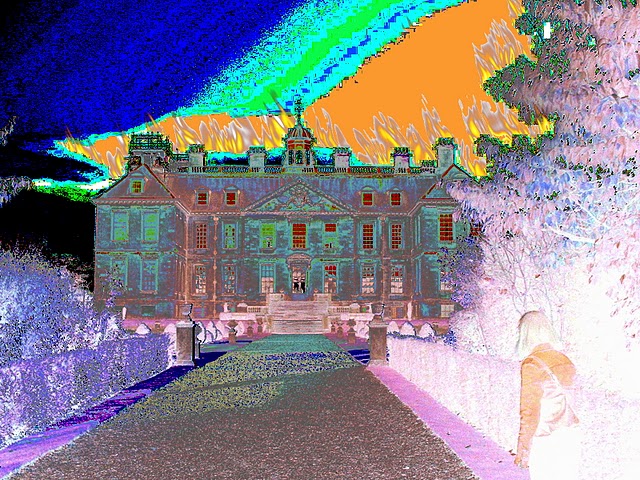
Our first visit to Belton house was almost a year ago and where I suffered from an acute case of photo deprivation when my then Canon camera had a touch of the wobblies.
Things have moved on since then, and over the last 12 months or so I have grown to be quite fond of the new Finepix camera which if I am honest I use much of the time in auto mode. Lazy if you like, but the results are not generally too bad, and there are plenty of manual options if the conditions demand it. The “I feel lucky” button on Picasa seems to hide a multitude of sins for most shots from the camera and I admit to having used it occasionally.
This picture of Belton House wasn’t with the new kit, nor did it come out of the camera looking that way. This is art! Picasso might have been proud of it, but, then again, maybe not. Andy Warhol perhaps? More likely someone not in full possession of all their faculties. That would be me then.
I did promise myself after the last trip to Belton that we would go again and try to recapture some of the pictures that got away the last time. So with the weather in the gorgeous setting, off we went, and 58 miles and only one wrong turn later we duly arrived. Time for lunch, then off to the gardens.

The entry point to the gardens takes you into the sunken Italian Garden which is overlooked by the Orangery completed about 1820 by Jeffry Wyatville and built on the site of the old manor house. These formal gardens were created around the same time and at their best are simply breathtaking. The grass is a bit dried up, but hey, that’s the price for great weather. After the last day or so it may well already be turning green again. As the National Trust are in charge there is no chance of seeing a sprinkler at work, and quite right too. Why does my garden not look like this? Well, the grass is pretty similar, but there the comparison ends, and in any case I don’t have several acres at my disposal, nor the plant knowledge, nor the funds, nor the time, nor....

Opposite to the Orangery is this lion headed exedra set off by 10 containers of trailing geraniums. Hands up all those who are not familiar with “exedra”. Yes, me too; before my research that is; it is, apparently, in architecture a semi-circular recess often set into a bulding’s facade. This one lacks the facade element, indeed, no building, and also the bench referred to in some definitions upon which conversations could take place is absent. We hadn’t been here long and already a sit down and a chat would have been welcome, but you get used to not having it all on days out in the country.

Around a central pond and fountain is a large circular retaining wall providing a formal edging to the flower borders. Being Italian there had to be stone urns, each with its geranium revelling in the warmth and the sunshine. I was by now very pleased to have made the journey, and even my wife didn’t complain at the number of photographs being taken. Here a click, there a click, everywhere a click, click.

Further around the circle and the display evolves into salvias and dahlias, again flowering their hearts out. Whenever either of these plants have been lovingly put into our garden there has been an immediate slugfest and a display of denuded stalks at best has been the result. At Belton there was no evidence of slug pellets so that I have no idea what their secret is. Maybe they come out in the early hours and shoot them!
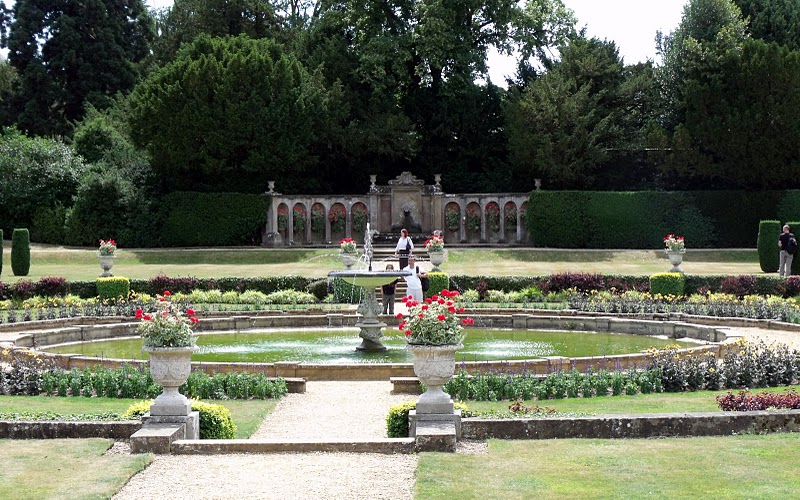
At one time I was not too keen on the formal garden, rather preferring the more natural look such as at parts of Hidcote Manor in Gloucestershire. Maybe it was the near perfect weather with warm sunshine and a cooling breeze, but I couldn’t get enough of this formality. I am not sure how many gardeners are employed, but for me they deserve a medal for such perfection. As Rudyard Kipling said in THe Glory of the Garden:
“Our England is a garden, and such gardens are not made
By singing: -"Oh, how beautiful!" and sitting in the shade.”
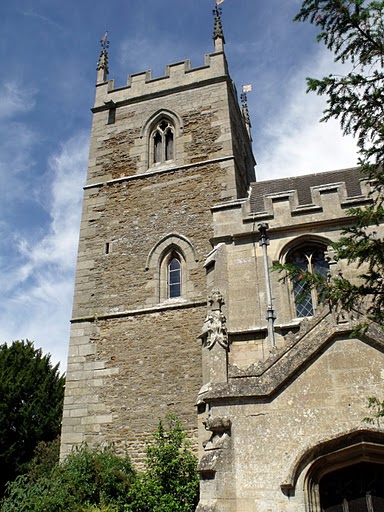
Just to the side of the Orangery is the local parish church of St Peter & St Paul. This is not owned by the Trust, but is well worth a visit to see the wealth of monuments and memorials to the Brownlows and Custs, many of whom are buried there. It was also a welcome bit of shade for a few minutes. Sadly for me churches are little more than a photo opportunity as I cannot confess to having any strong beliefs regarding religious matters, ‘though church music does have a place in my soul even though you wouldn’t want to listen to my unmelodious outpourings in this regard.
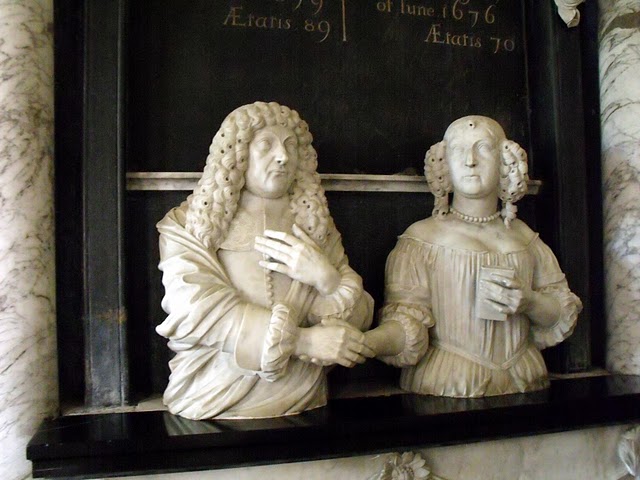
This rather touching monument is to the “Old” Sir Brownlow and his wife Alice. They had no children of their own, but brought up his great-niece Alice Sherard and had close links to his great-nephew ‘Young’ Sir John (grandson of his brother Sir William); the two young people had both lost their fathers in 1668. To ‘Old’ Sir John’s delight, they were attracted to one another and married in 1676. Don’t you just love a happy ending.
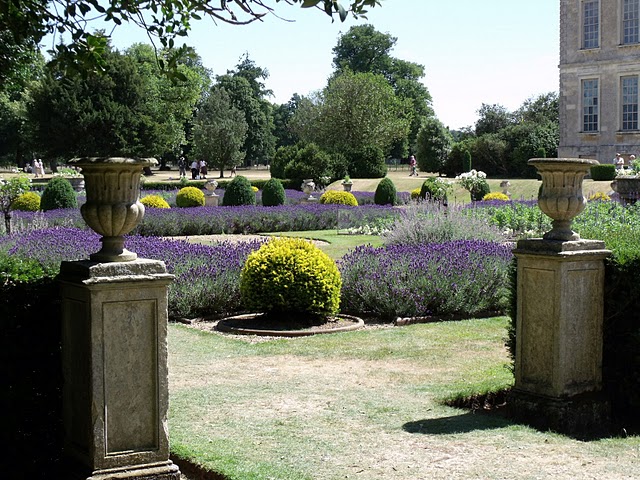
Leaving behind the cool of the church we hopped across Europe to the Dutch garden. Unfortunately I cannot adequately convey the perfume in the air from the masses of lavender all in full bloom. Again it is all formality but as explained before, I’m hooked. A London Lavender Seller’s Cry from around 1900 tackled a problem not actually apparent at Belton:
“Here’s your sweet lavender
sixteen sprigs a penny
that you’ll find my ladies
will smell as sweet as any"
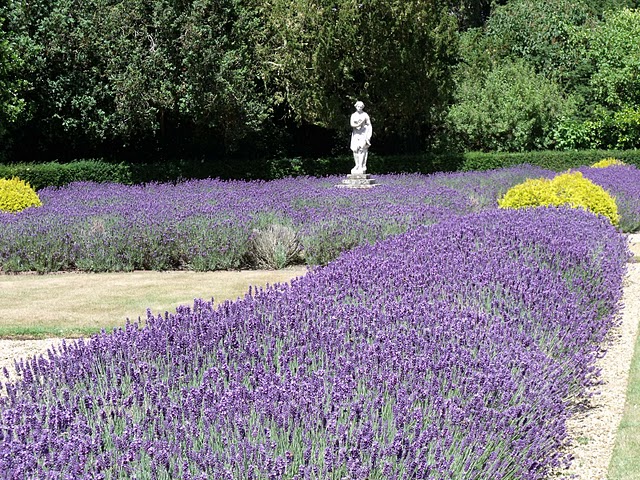
Just how much lavender there is can be seen here in just one corner of the Dutch Garden. The last time I saw more was in Provence many years ago where of course it is grown commercially. That too was memorable, but somehow Belton has even more of a wow factor. And it’s not French!
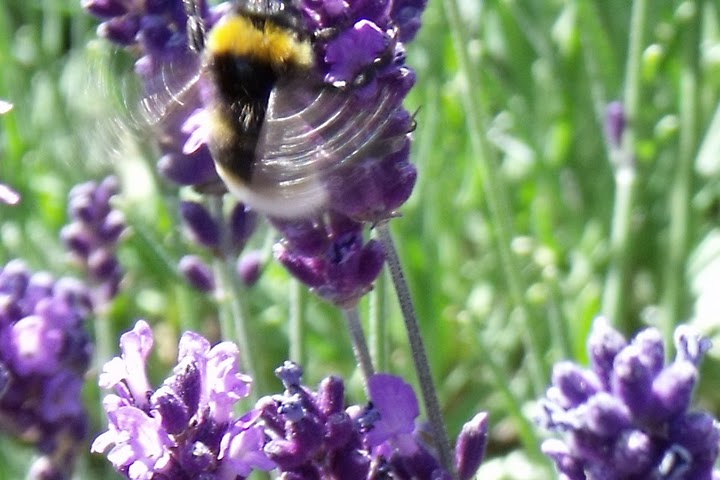
The bees were going absolutely crazy to get at the lavender; there must have been hundreds of them. But would they stay still long enough to get a decent photo? Would they heck! Not only bees were impressed by the feast before them. Even Edward Lear recognised the value in his poem :
“The Pobble who has no toes
Had once as many as we;
When they said "Some day you may lose them all;"
He replied "Fish, fiddle-de-dee!"
And his Aunt Jobiska made him drink
Lavender water tinged with pink,
For she said "The World in general knows
There's nothing so good for a Pobble's toes!"
I say nothing about my toes but we do have some lavender in our garden.
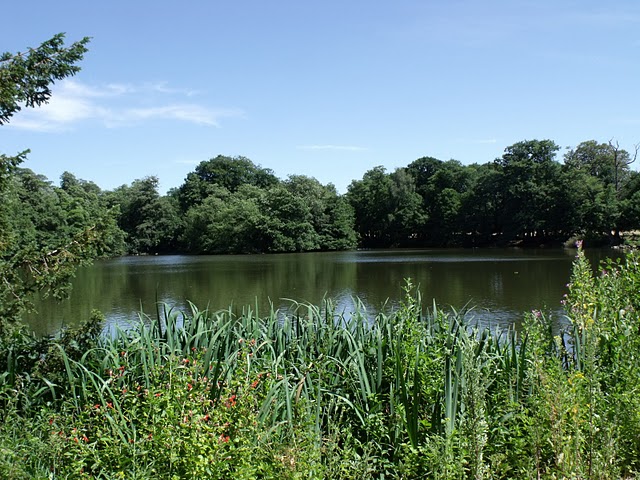
Although by now it was getting very warm we took a walk through the park to the lake which was a scene of peace and tranquillity and the sight of all the water seemed to make it feel cooler. In all probability there was really little difference, but it felt better. The lake is home to an army, or should that be navy, of greylag geese who earlier in the day we saw keeping the grass short in the Italian Garden.


The boathouse was built by Anthony Salvin in 1826 and was one of the earliest examples of his work, in this case an”Alpine Tudor” design. It has been recently restored by the Trust and was attracting quite a lot of attention.
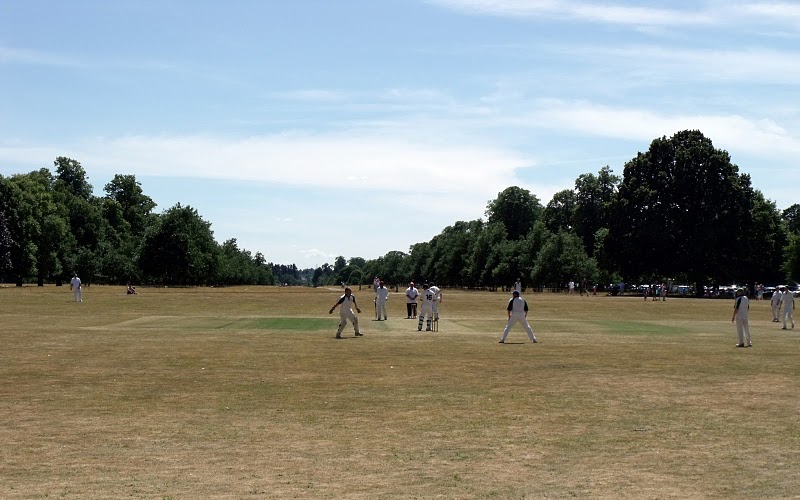
A walk back to the house took us by this quintessential English country house scene. A cricket match on the lawn. Too many sixes could have taken care of some pretty expensive windows , but I don’t think Botham was playing that afternoon. There had been a warning notice advising visitors to beware the cricket balls; sound advice I’d say. Cricket is something else that has never greatly appealed to me. It just goes on and on and sometimes, five days later a draw is declared. There has to be something wrong if after 5 days you still cannot sort out a winner. And don’t mention the weather!

The front steps led straight onto the cricket pitch, but we reluctantly tore ourselves away from the excitement outside and went within to see how the family lived. Although photography is now allowed in many National Trust houses I did not avail myself of the opportunity on this occasion as the light levels were very low to protect the fabrics and pictures on view. The rooms show a progression of styles from the 17th century to early 20th, the period that the Brownlow and Cust families lived in the building. It was certainly a visit well worth making and I can definitely recommend it as a perfect day out.
Looking at the clouds now massing again outside today it would seem that normal English summer service is being being resumed. I’m very pleased that we went when we did.


